

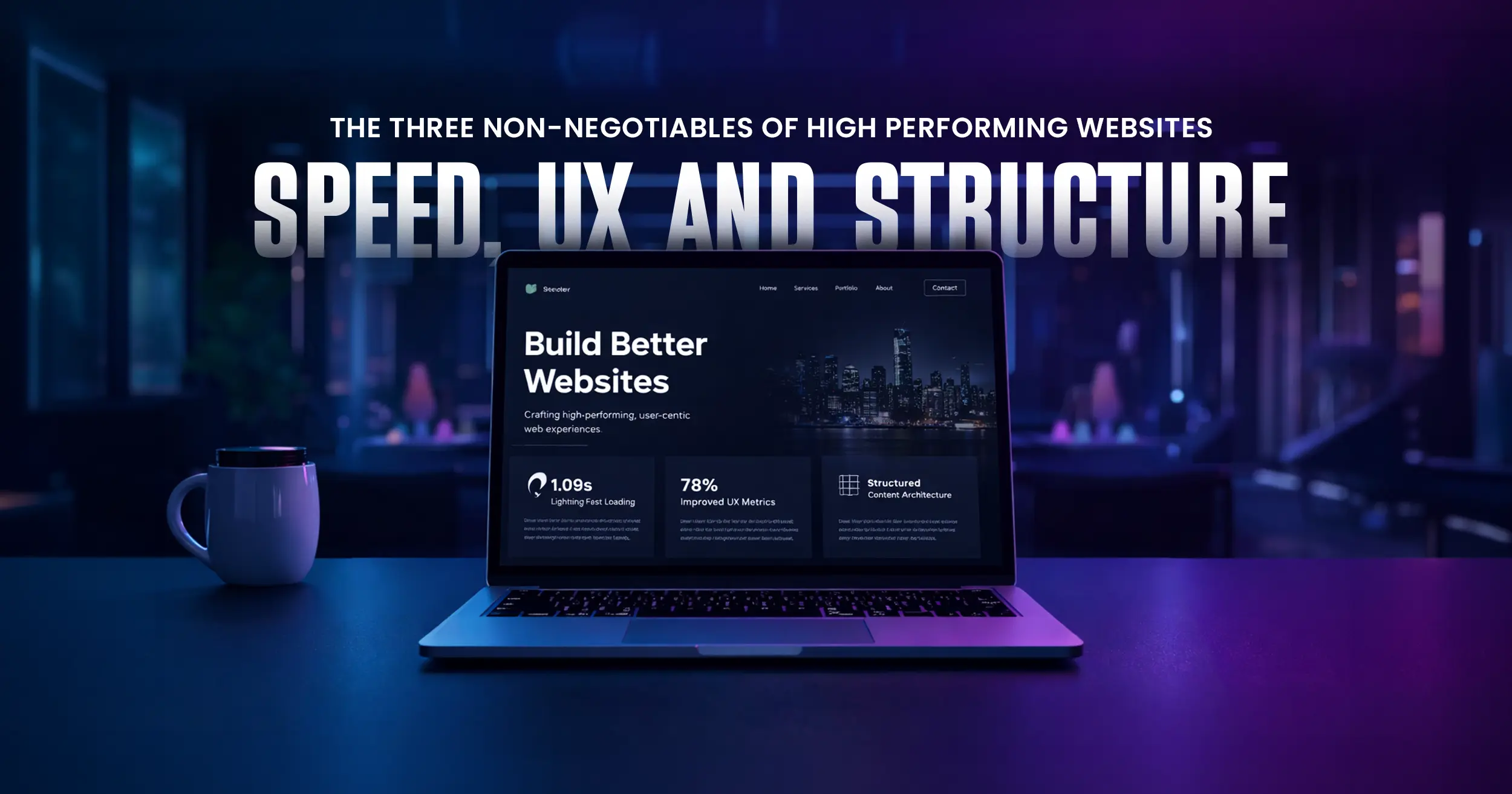
In our experience working with growing brands and ambitious founders, one misconception appears repeatedly. Businesses assume that high performing websites are defined by visual design. They invest heavily in aesthetics, animations and trends while overlooking the three structural elements that truly determine performance.
Website speed. User experience. Website structure. If these three pillars are weak, no visual creativity can compensate. A website may look impressive yet fail to rank, convert or scale.
At Brand 360s, when we audit underperforming platforms, we rarely identify a purely visual issue. We uncover gaps in website speed optimization, inconsistencies in UX design or weaknesses in SEO architecture.
Website Speed: The First Layer of Performance
Website speed is not simply a technical metric. It is the first psychological signal of credibility. When a site loads slowly, trust declines instantly. Visitors rarely wait. They exit.
Modern performance is measured through Core Web Vitals, server response time, image optimization and code efficiency. Search engines evaluate real user data, especially on mobile devices. That means website speed directly influences both website SEO and conversions.
A fast-loading mobile-first website improves engagement metrics, reduces bounce rate and strengthens ranking signals. Clean code, optimized assets and structured loading sequences form the foundation of true website speed optimization. Speed is not an enhancement. It is a prerequisite.
How Website Speed Impacts SEO
Search engines incorporate performance signals into ranking algorithms. Poor Core Web Vitals such as slow Largest Contentful Paint or unstable layouts send negative quality signals. Optimized website speed improves crawl efficiency and helps search engines index content more effectively. This strengthens technical SEO without adding additional content. A faster site creates stronger behavioral metrics. Better engagement improves search visibility organically.
How Website Speed Impacts Conversions
Conversion begins with trust. Trust begins with responsiveness. High performing websites load seamlessly across devices. They eliminate friction before persuasion even begins. Slow load times reduce enquiry submissions and negatively impact conversion rate optimization efforts. Speed protects revenue.
User Experience: Where Strategy Meets Behavior
User experience is frequently misunderstood as layout aesthetics. In reality, it represents the structured flow of information and decision-making clarity. A site can look modern yet fail users if navigation is unclear or messaging lacks hierarchy. Effective UX design ensures visitors immediately understand what you offer, who you serve and why it matters.
High performing websites guide users intentionally through structured content flow, clear calls to action and strategic content layering. User experience is not decorative. It is directional.
UX Design and the Mobile-First Website
In mobile-dominant markets, mobile-first website strategy is essential. Effective UX design prioritizes thumb-friendly navigation, readable typography and structured scrolling. Mobile usability directly impacts local SEO performance and engagement signals. If mobile experience fails, rankings and conversions decline together. High performing websites treat mobile as primary, not secondary.
User Experience and Conversion Rate Optimization
Strong conversion rate optimization depends on structured UX decisions. Clear value propositions, strategic placement of trust elements and visible enquiry triggers increase lead generation. When UX aligns with search intent, conversions improve naturally. Design without strategic UX reduces effectiveness.
Website Structure: The Invisible Growth Engine
If speed builds trust and UX guides action, website structure drives authority. Structure refers to your SEO architecture, internal content hierarchy and logical organization of services and topics. A poorly structured site confuses both users and search engines. Strong website SEO depends on semantic clarity.
High performing websites are built on scalable SEO architecture, structured URLs and strategic internal linking. Without structural integrity, visibility plateaus.
SEO Architecture and Topical Authority
Modern website SEO relies on topical depth and structured content ecosystems. Through effective internal linking, topic clusters distribute authority across related pages. Search engines evaluate how well your structure demonstrates expertise. A disorganized website struggles to build sustainable ranking power. Strong SEO architecture allows long-term digital growth.
Structure and Technical SEO
Clean hierarchy improves crawl efficiency. Logical navigation supports indexing. Proper sitemap structure strengthens visibility. Effective technical SEO depends on structural clarity. High performing websites are engineered to scale without compromising search performance.
How Speed, UX and Structure Work Together
These three elements do not operate independently. Strong website structure simplifies code complexity, which improves website speed. Better user experience reduces bounce rate, which strengthens SEO signals. Optimized SEO architecture reinforces authority, which supports sustainable digital growth. When these pillars align, performance compounds. When they do not, marketing investment leaks.
A Real Evaluation of Performance Gaps
Recently, we evaluated a service-based company that believed its website required a visual overhaul. On the surface, the design appeared modern.
However, deeper analysis revealed:
- Weak Core Web Vitals performance on mobile.
- Buried service pages due to poor website structure.
- Limited internal linking, weakening SEO architecture.
The issue was not design. It was alignment between website speed, user experience and structure. After implementing targeted website speed optimization, restructuring navigation and strengthening conversion rate optimization, enquiry performance improved significantly without a full redesign. High performing websites are engineered systematically.
Why Most Websites Underperform
Businesses often focus on: Visual branding, color schemes, interactive animations. They neglect: Website speed optimization, strategic UX design, scalable SEO architecture. Without these foundations, growth stalls. A website is not a brochure. It is a strategic performance asset.
How Brand360s Builds High Performing Websites
As a website design company in Chennai, Brand 360s integrates performance from the start. Our process prioritizes: Advanced website speed optimization aligned with Core Web Vitals. Mobile-first UX design. Structured SEO architecture. Scalable website SEO strategy. Strong technical SEO foundation.
We do not treat performance as an afterthought. We engineer it before aesthetics. Our focus is measurable digital growth, not decorative presentation.
