

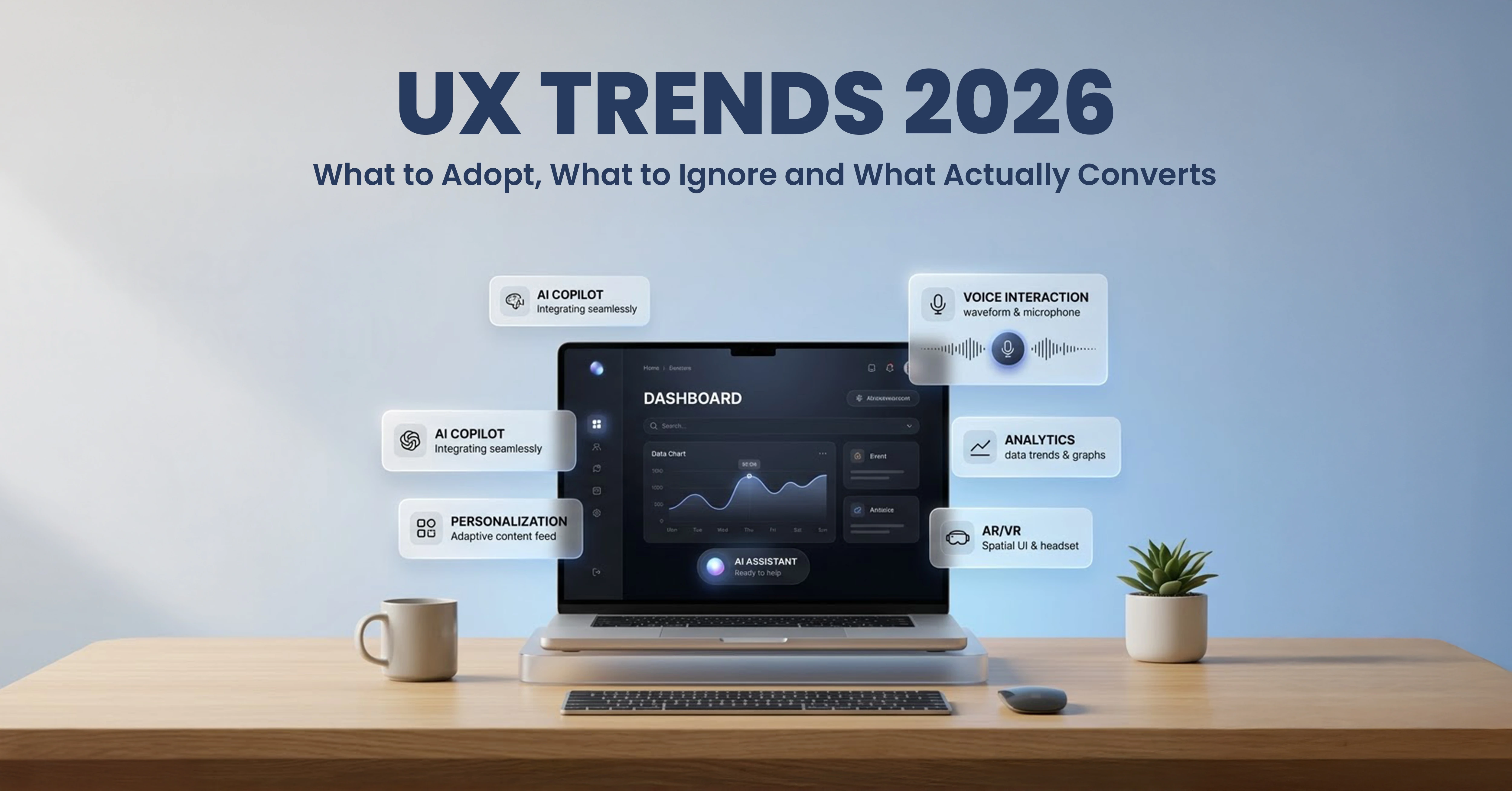
User experience design in 2026 is no longer just about aesthetics. Modern UX strategy focuses on conversion driven interfaces, AI assisted interactions, speed, clarity and behavioral design that helps users complete actions quickly and confidently.
Over the past decade the meaning of user experience design has changed dramatically. Many businesses still believe UX simply refers to how attractive a website looks. In reality modern UX design is deeply connected to business growth. When someone lands on a website they form an impression within seconds. If the interface feels confusing, slow or overwhelming users leave immediately. That is why UX design has become one of the most important drivers of conversion rates. In our experience working with growing companies at Brand 360s, the difference between a website that attracts traffic and a website that actually converts often comes down to the clarity of its user experience. As we move into 2026 new UX trends are emerging that reshape how users interact with digital products. Some of these trends genuinely improve usability and engagement while others are simply visual trends that do little to improve performance. Understanding which UX trends to adopt and which to ignore can make the difference between a website that impresses visitors and one that consistently generates business results.
AI Driven UX Design and Intelligent Interfaces
Artificial intelligence is rapidly changing how websites and digital platforms interact with users. Instead of static interfaces, modern UX design increasingly adapts to user behavior and intent. AI-powered UX is becoming one of the most significant trends shaping digital products in 2026. Designing interfaces that anticipate user behavior and prioritize usability as recommended in Google's UX Playbooks - not only improves engagement but can also enhance search performance and overall user satisfaction.
AI Personalization in Website Experience
Personalization has become a powerful UX strategy. AI systems can analyze visitor behavior and dynamically adjust content, recommendations and interface elements. When users see relevant information quickly they are more likely to stay on the site and engage further. Personalization improves both user satisfaction and conversion performance.
Conversational Interfaces and AI Assistants
Another major UX trend is the rise of conversational interfaces such as AI chat assistants. These tools allow users to interact with websites in a natural way by asking questions or requesting information directly. At Brand 360s, we have seen that conversational UX elements often improve user engagement because they reduce the friction of navigating through multiple pages.
Predictive UX and Behavioral Data
Predictive UX uses behavioral data to anticipate user needs. For example an e-commerce platform may highlight products related to a user's browsing history while a service website may guide visitors toward consultation booking pages. Predictive interfaces make digital experiences feel intuitive and responsive.
Speed, Clarity and Simplicity in UX Design
One of the most important UX principles remains surprisingly simple: clarity. Websites that communicate information quickly and clearly consistently outperform visually complex designs. In fact some of the most effective UX strategies involve simplifying rather than adding features.
Fast Loading Interfaces and Performance Optimization
Speed remains a crucial UX factor. Users expect websites to load almost instantly and delays of even a few seconds can increase bounce rates significantly. For a deeper look at how site speed and structural UX improvements drive engagement and conversions, see our analysis of high‑performing websites and UX structure. Optimizing page speed and reducing interface friction are therefore key priorities for modern UX design.
Minimalist Layouts and Content Hierarchy
Minimalism continues to influence UX design but not merely for aesthetic reasons. Clear layouts help users understand where to focus their attention. Effective content hierarchy guides users through information in a logical sequence that supports decision making.
Mobile First UX Design Strategy
Mobile usage now dominates web traffic globally. As a result, mobile first UX design has become essential rather than optional. Prioritizing readability, navigation simplicity and responsive layouts ensures users can easily interact with content on smaller screens. During many UX reviews conducted by Brand 360s, improving the mobile interface alone significantly increases user engagement. Businesses looking to implement these strategies can explore our website design services in Chennai for mobile-optimized, conversion-focused websites.
UX Design Elements That Actually Improve Conversions
While many UX trends focus on visual aesthetics the most valuable trends are those that directly influence user behavior. Conversion driven UX focuses on guiding users toward meaningful actions such as inquiries, purchases or bookings.
Clear Call To Action Design
Calls to action play a crucial role in conversion optimization. A strong call to action communicates exactly what the user should do next whether it is requesting a quote, scheduling a consultation or downloading information. UX design should highlight these actions clearly without overwhelming the user.
Trust Signals and Credibility Indicators
Users are more likely to convert when they trust the website they are interacting with. Testimonials reviews security badges and clear brand messaging strengthen credibility. Many businesses we work with at Brand 360s see measurable improvements in conversion rates when credibility signals are integrated thoughtfully into the user journey.
Guided User Journeys and Conversion Paths
Effective UX design anticipates user needs and creates guided pathways that lead visitors toward desired actions. Instead of leaving users to explore randomly the interface should gently guide them through information that builds confidence and encourages engagement.
UX Trends Businesses Should Ignore
Not every design trend improves usability. In fact some popular trends can actually harm the user experience if implemented without strategic thinking. Businesses should focus on UX strategies that enhance clarity rather than adopting trends purely for visual novelty.
Overly Complex Animations and Visual Effects
Animations can make a website feel modern but excessive motion often distracts users from the content itself. Complex visual effects can also slow down performance which negatively impacts both UX and SEO.
Design Trends That Sacrifice Usability
Some visual design trends prioritize artistic presentation over usability. For example unconventional navigation styles or hidden menus may look creative but can confuse visitors who expect familiar interaction patterns.
Interface Trends Without Conversion Strategy
A visually impressive interface does not guarantee business results. UX design must always align with business goals. In many of the digital strategy projects we handle at Brand 360s, we emphasize that the best UX designs are those that support user goals and business objectives simultaneously.
Conclusion
User experience design is evolving rapidly as technology advances and user expectations increase. The most successful websites in 2026 will not simply follow visual trends but will prioritize clarity, speed and meaningful interaction. Artificial intelligence personalization, mobile optimization and conversion focused interfaces are shaping the future of digital experiences. At the same time businesses must remain cautious about adopting trends that add complexity without improving usability. In our experience at Brand 360s, the websites that perform best are those that treat UX design as a strategic discipline rather than a decorative layer. When user behavior, data interface clarity and conversion strategy come together the result is a digital experience that not only attracts visitors but also converts them into customers.
