

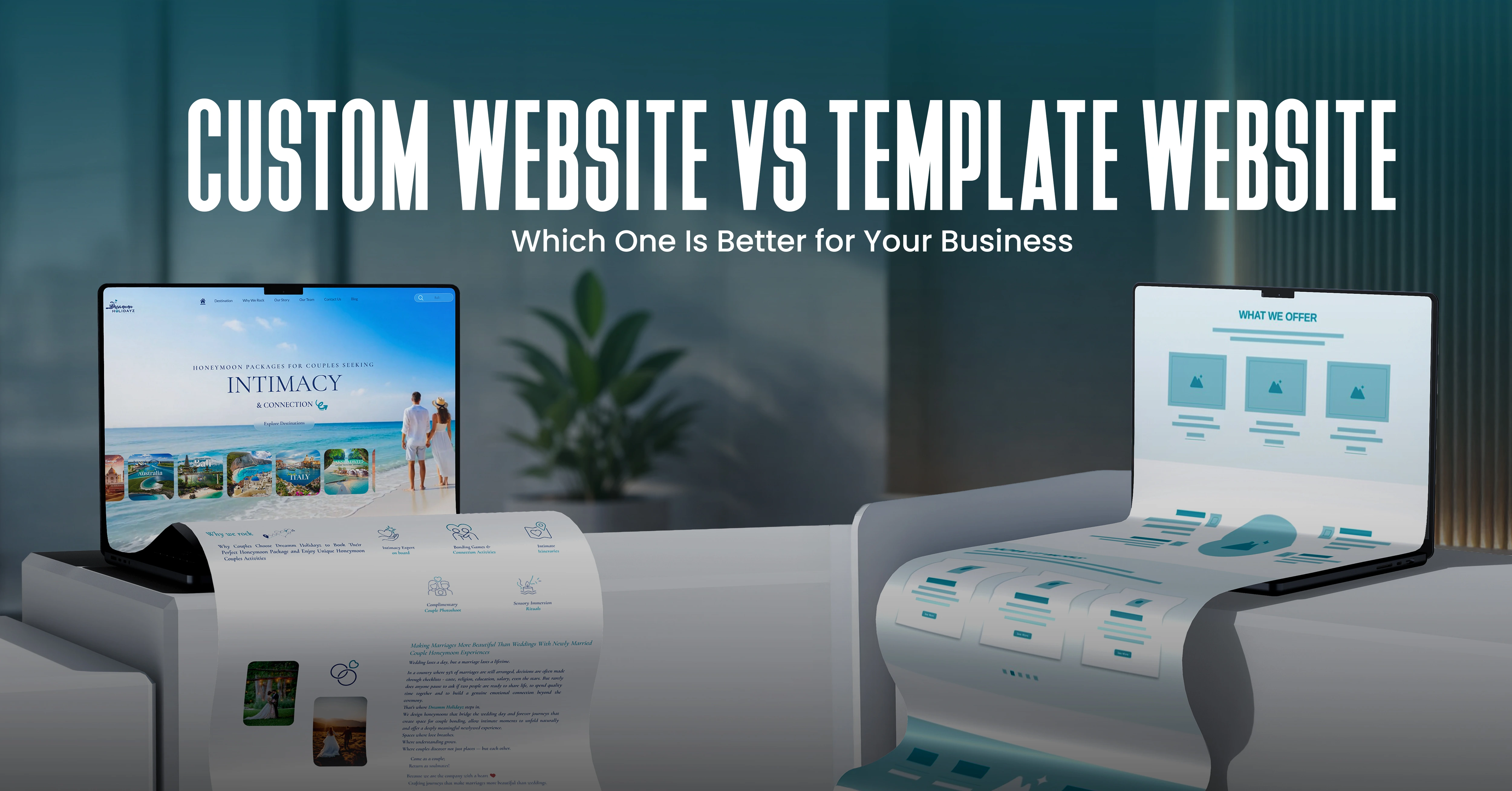
Custom websites offer flexibility, scalability and stronger SEO performance, while template websites are faster and cheaper but limited. The right choice depends on your growth goals, budget and long-term strategy.
When businesses decide to build a website, one of the most common questions they face is whether to choose a custom website or a template website. At first glance, the decision seems straightforward. Templates appear quick, affordable and convenient, while custom websites feel like a larger investment that takes more time. But the reality is far more nuanced, especially when you start evaluating different website development services available in the market.
What most businesses don't realize is that this decision affects not just how the website looks, but how it performs, how it ranks on Google and how effectively it converts visitors into enquiries. Over the years, I have seen many businesses start with a template website to save cost, only to rebuild everything within a year because the website could not support their growth.
In many of the strategy discussions we conduct at Brand 360s, this is a turning point for clients. They begin by asking about cost, but eventually understand that the real question is about long-term value. According to research, users form an impression about a website in less than a few seconds and that impression directly impacts trust and conversion. If your website does not communicate clarity and credibility instantly, you lose potential customers before they even explore further.
Choosing between a custom website and a template website is not just a design decision. It is a business decision that shapes your digital future.
What Is a Template Website
Understanding Pre-Built Website Design
A template website is built using pre-designed layouts where the structure, design and elements are already defined. Many businesses opt for such solutions through basic website design services that focus on speed and affordability rather than customization. Companies can quickly insert their content, images and branding into this framework, making templates attractive for those who want a fast launch without investing too much time or money.
However, the limitation lies in flexibility. Since the structure is pre-built, customization options are restricted. While templates may work for simple use cases, they often fail to adapt as business requirements evolve.
What Is a Custom Website
Fully Tailored Website Development
A custom website is designed and developed from scratch based on your business goals, audience behavior and brand identity. Every element is intentionally built to serve a purpose, whether it is guiding users, improving SEO or increasing conversions.
This approach allows complete control over structure, functionality and performance. Businesses that are serious about growth often benefit more from custom websites because they are built as scalable systems rather than fixed designs.
Custom Website vs Template Website: Key Differences
Flexibility, Control and Scalability
The most important difference between custom and template websites is control. Template websites limit what you can modify, while custom websites allow you to shape every aspect of the experience.
This becomes critical when businesses grow. Features, integrations and content requirements change over time. Many businesses that initially choose templates eventually face challenges that require a full rebuild, which is why understanding website redesign vs repair decisions becomes important early on.
Impact on SEO and Google Ranking
SEO Performance Comparison
Search engines prioritize websites that are well-structured, fast and relevant. Custom websites allow full control over SEO architecture, including page hierarchy, internal linking and content optimization.
Templates, on the other hand, often come with limitations that restrict SEO performance. This is closely related to how SEO in modern web development plays a role in building search visibility. Businesses that rely solely on templates may struggle to achieve consistent rankings.
User Experience and Conversion Differences
Designing for Real Business Outcomes
User experience is one of the biggest factors influencing conversions. A custom website allows you to design user journeys based on how your audience behaves. Every section can be structured to guide visitors toward action.
Templates may look visually appealing, but they often lack the depth required to create meaningful engagement. Understanding UX trends that actually convert highlights why structured UX matters more than aesthetics.
Website Performance and Speed Comparison
Core Web Vitals and Load Speed
Performance plays a major role in both SEO and user experience. Custom websites can be optimized for speed, while templates often include unnecessary code that slows them down.
Even small delays in loading time can impact conversions significantly. This is why Core Web Vitals optimization is a key factor when choosing between custom and template solutions.
Cost Comparison: Custom vs Template Websites
Short-Term Savings vs Long-Term ROI
Template websites are cheaper upfront, which makes them appealing for businesses with limited budgets. However, the real cost emerges later when the website needs to be redesigned or upgraded.
Custom websites require higher initial investment, but they deliver better long-term value. This is similar to how businesses evaluate website design cost in Chennai when planning their digital strategy.
Real Case Comparison: Template vs Custom Website
What Happens in Real Business Scenarios
In one case we handled at Brand 360s, a business had launched a template website to save cost. The website looked good but failed to generate enquiries. The issue was not traffic but structure and user flow.
After rebuilding the website as a custom solution with proper content hierarchy and UX design, the business started receiving consistent enquiries without increasing marketing spend. This clearly demonstrates that the right structure often matters more than design alone.
ROI Comparison: ₹20K Template vs ₹1L Custom Website
Understanding Investment vs Returns
A ₹20,000 template website may save money initially, but if it generates zero enquiries, its ROI is effectively zero. On the other hand, a ₹1,00,000 custom website that consistently brings leads becomes a revenue-generating asset.
The real comparison is not cost vs cost. It is cost vs outcome. Businesses that understand this make better long-term decisions.
Common Mistakes Businesses Make When Choosing
Wrong Decision Patterns
Many businesses choose templates because they underestimate their growth potential. Others choose based on price without understanding long-term implications.
These mistakes often lead to rebuilding, which increases total cost and delays growth.
Which One Should You Choose for Your Business
Decision Based on Business Goals
If your goal is to simply have an online presence, a template website may work. But if your goal is visibility, lead generation and growth, a custom website is the better choice.
In many cases we see at Brand 360s, businesses that start with templates eventually transition to custom solutions once they realize the limitations.
Conclusion
Choosing between a custom website and a template website is not just about design or cost. It is about building the right foundation for your business. Templates offer speed and affordability, but they come with limitations that can restrict growth, especially when considering how website structure and performance impact search rankings.
In our experience working with businesses at Brand 360s, the companies that achieve long-term success are those that invest in systems rather than shortcuts. A website should not just exist. It should perform, rank and convert. When your website aligns with your business goals, it becomes a powerful driver of growth.
