

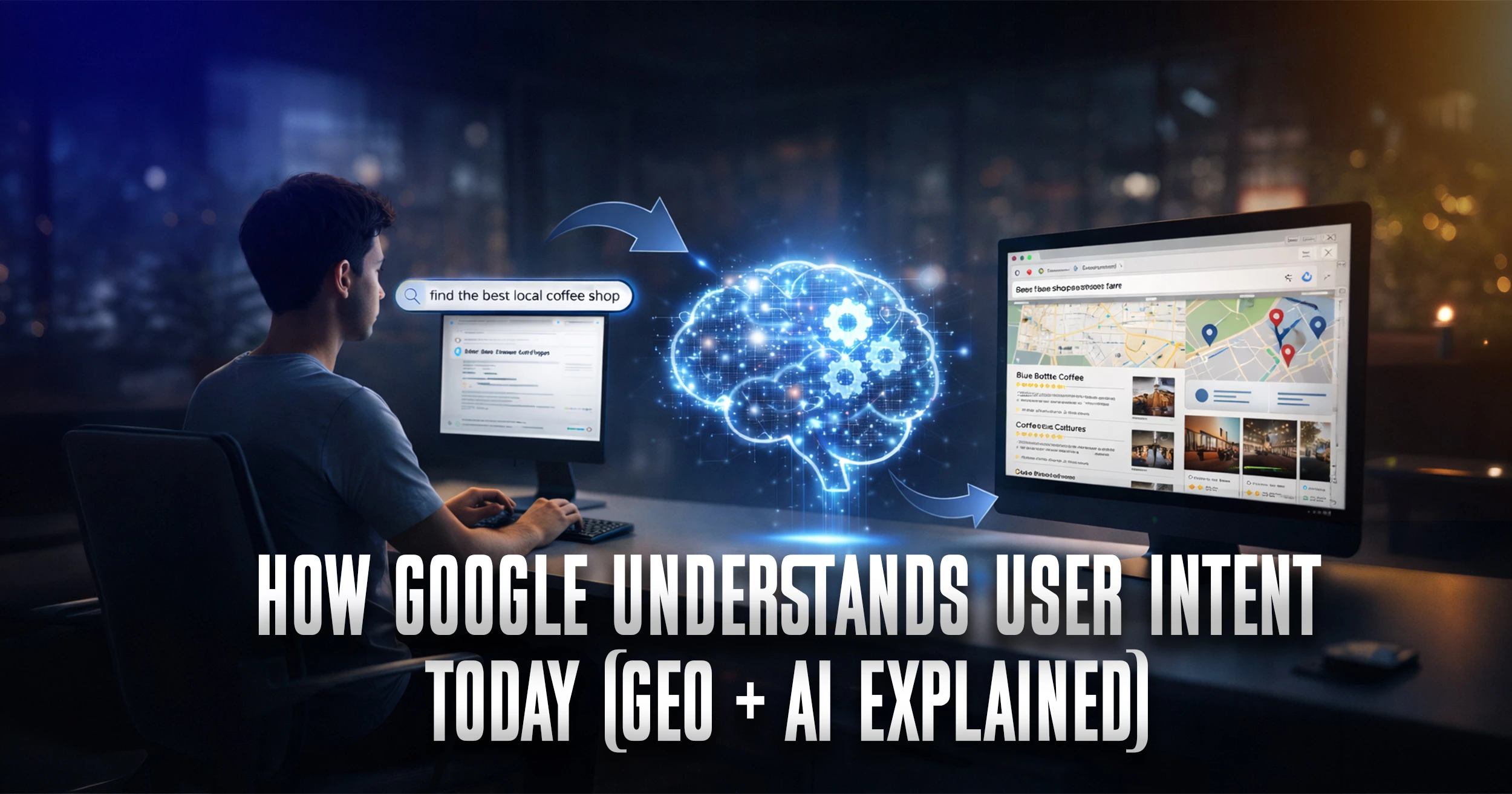
Modern search engines no longer rely only on keywords. Using AI-driven systems such as natural language processing, entity recognition and contextual analysis, Google now evaluates user intent, content relevance and topical authority to determine which pages deserve to rank.
For many years SEO revolved around one central concept: keywords. Businesses believed that if the right keywords appeared frequently enough on a page Google would rank that page higher in search results. That approach worked for a time but search has evolved dramatically. Today Google's algorithms use advanced artificial intelligence to understand not just what users type into the search bar but what they actually mean. Search engines now evaluate context, behavior, intent and authority. The goal is no longer to match words on a page. The goal is to deliver the most relevant answer to the user's underlying question.
In the website audits we regularly conduct at Brand 360s, one of the most common discoveries is that many websites still optimize only for keywords while ignoring user intent. This gap between traditional SEO tactics and modern search behavior is often the real reason pages struggle to rank. Understanding how Google interprets user intent and search context is therefore essential for businesses that want sustainable visibility online.
How Google Uses AI to Understand Search Intent
Google's search engine is now powered by sophisticated AI models that analyze language patterns and user behavior. Instead of simply matching keywords these systems attempt to understand the meaning behind a search query. This shift has fundamentally changed how SEO works.
Natural Language Processing and Search Context
Natural language processing allows Google to interpret conversational queries and complex search phrases. When a user searches for something like "best website design company for small businesses" Google does not simply scan for those exact words. Instead it analyzes the context of the query and identifies pages that address the broader concept. This is why modern SEO must focus on topic relevance and contextual clarity rather than keyword repetition.
Entity Recognition and Topic Relationships
Google's algorithms now identify entities which are recognizable concepts such as brands, industries, products and locations. These entities help search engines understand relationships between topics. For example if a website consistently publishes content about SEO strategy website performance and digital growth Google begins to associate that site with expertise in those areas. At Brand 360s, we often explain to clients that strong entity signals help search engines recognize a website as an authority in its niche.
User Behavior Signals and Engagement Data
Google also analyzes user behavior after a search result is clicked. Metrics such as time spent on a page interaction patterns and bounce rates provide signals about whether the page satisfied the user's intent. If users quickly return to the search results the algorithm may interpret that page as less relevant. As a result user experience and content clarity have become important ranking factors.
Why Traditional Keyword SEO Is No Longer Enough
Many businesses still rely on traditional keyword optimization methods. While keywords remain important they are now only one piece of a much larger system. Search engines expect content to demonstrate contextual relevance and topical depth.
Keyword Matching vs Intent Matching
Older SEO models focused on exact keyword matches. Modern algorithms prioritize intent matching which means identifying content that genuinely answers the user's question. A page that explains a topic clearly will often rank higher than a page that simply repeats the keyword multiple times.
Topical Authority and Content Clusters
Google now evaluates whether a website demonstrates consistent expertise on a topic. This is known as topical authority. Websites that publish interconnected articles around a specific subject signal deeper expertise to search engines. In many of the content strategies we design at Brand 360s, building topic clusters is one of the most effective ways to strengthen SEO performance.
Check out our guide on SEO strategy and website performance to understand how technical factors contribute to topical authority.
Semantic Search and Related Concepts
Modern search engines analyze related terms and concepts that appear within content. This process is known as semantic search. For example a well written article about website optimization might also naturally discuss topics such as user experience, website speed, mobile responsiveness and technical SEO. These related concepts help search engines understand the broader context of the page.
Generative Search and the Rise of GEO
The introduction of generative AI in search results has created a new concept known as Generative Engine Optimization or GEO. Instead of simply displaying links search engines increasingly generate AI driven summaries that answer user questions directly. For businesses this shift means that SEO must now consider how content is interpreted by AI systems.
AI Search Summaries and Answer Engines
When users ask complex questions search engines may display AI summaries that compile information from multiple sources. These summaries rely heavily on structured authoritative content. Pages that clearly explain a topic and demonstrate expertise are more likely to be referenced by AI systems.
Structured Content and Knowledge Signals
Content that follows clear structure using headings definitions and well organized sections is easier for AI systems to interpret. This is one reason why we emphasize structured content frameworks at Brand 360s when building SEO strategies for clients.
Authority Signals in the Age of AI Search
As generative search evolves authority signals become even more important. Websites with strong credibility, consistent branding and reliable content are more likely to appear in AI generated answers. This makes brand reputation and digital authority increasingly important for SEO success.
How Businesses Should Adapt Their SEO Strategy
The shift from keyword matching to intent understanding requires a new approach to SEO. Businesses that continue relying on outdated tactics often struggle to compete. Successful SEO today requires alignment between content strategy technical performance and topical authority.
Focus on User Questions and Real Problems
Instead of writing content around isolated keywords businesses should create articles that answer real questions users are asking. Content that addresses practical problems naturally aligns with search intent.
Build Topic Authority Through Consistent Content
Publishing multiple related articles around a core theme strengthens topical authority. Over time search engines begin to recognize the website as a reliable source of information in that field. Many businesses we work with at Brand 360s experience ranking improvements when their content strategy shifts toward topic clusters instead of isolated posts.
Combine Technical SEO with Content Strategy
Even the best content cannot rank if the website itself performs poorly. Technical SEO, mobile optimization and page speed all influence how search engines evaluate a website. A balanced strategy that combines technical optimization and content authority produces the strongest results.
Conclusion
Search engines have evolved far beyond simple keyword matching. Through AI driven systems Google now analyzes language patterns, search behavior and contextual signals to understand the real intent behind a query. For businesses this means that SEO must move beyond traditional keyword optimization. Websites that focus on user intent, topical authority and structured content are far more likely to succeed in modern search environments.
In the work we do with growing businesses at Brand 360s, one pattern becomes very clear. The websites that achieve long term search visibility are those that treat SEO as a strategic ecosystem rather than a collection of isolated tactics. When content quality technical performance and search intent alignment work together search engines recognize the value of the website and sustainable ranking growth follows.
