

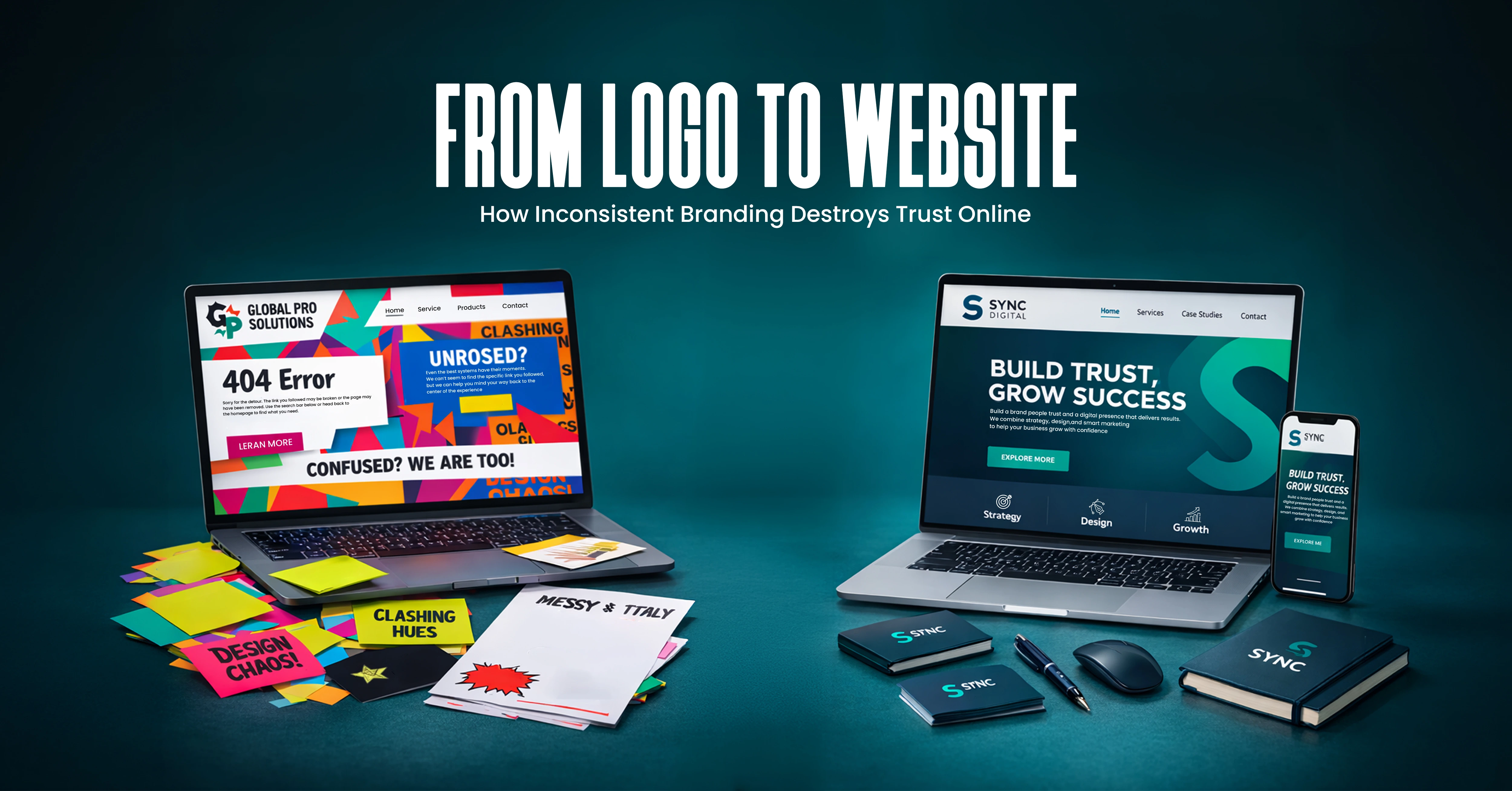
Over the years, I have reviewed many business websites for companies trying to improve their online visibility and conversions. In many of those conversations, business owners initially assume that their website problem is related to design quality or marketing strategy.
But very often, the real issue is something much more subtle.
It is inconsistent branding.
A company may have a professionally designed logo, a well-built website and active social media profiles. Yet when these elements are experienced together, they feel disconnected. Colors change from platform to platform. Typography varies across pages. Messaging tone shifts between blog content and service pages.
To the business owner, these differences may appear minor. To a visitor encountering the brand for the first time, however, they create uncertainty.
And uncertainty weakens brand trust.
In today's digital environment, a brand is not defined by a logo alone. It is defined by the consistency of the entire digital experience. When brand identity, messaging and website branding align across every platform, businesses appear reliable and professional.
When they do not, visitors hesitate.
That hesitation can quietly reduce engagement, conversions and long-term brand credibility.
Why Brand Consistency Is the Foundation of Digital Trust
The first concept I explain to clients when evaluating their digital presence is that brand consistency is not merely a design preference. It is a strategic foundation for credibility.
Every time a potential customer encounters your business online, they are forming an impression. That impression is shaped not only by what you say but by how consistently you present yourself.
Consistent visual identity, messaging tone and brand positioning create a sense of familiarity. Familiarity reduces uncertainty. When uncertainty disappears, trust begins to form.
Strong brand identity systems ensure that every digital touchpoint reinforces the same narrative about the business.
How Consistent Brand Identity Improves Recognition
A well-defined brand identity allows audiences to recognize your business instantly.
Elements such as color palette, typography and visual style become associated with your company over time. When these elements remain consistent across your website branding, social media graphics and marketing materials, recognition grows naturally.
Recognition reduces friction for users navigating your website and improves overall user experience.
Why Consistency Builds Brand Trust
Trust is rarely created through a single interaction. It develops gradually through repeated exposure to a brand that behaves consistently.
When design elements and messaging remain aligned across digital channels, visitors perceive the business as organized and reliable.
On the other hand, inconsistent branding introduces doubt. Even small differences in visual identity can create the impression that the business lacks structure.
Consistency signals professionalism.
The SEO Benefits of Brand Consistency
Search engines increasingly evaluate brands as entities rather than isolated pages.
When a business maintains consistent branding signals across its website, social profiles and online mentions, it strengthens its digital branding authority.
Consistent brand identity also improves recognition in search results, helping users associate your brand with specific topics and services.
This alignment supports long-term SEO performance.
The Hidden Cost of Inconsistent Branding Online
Many companies underestimate the impact of inconsistent branding across their digital platforms.
A website may use one visual style while social media posts use another. Blog articles may adopt a different tone than service pages. Marketing materials may introduce additional colors or fonts.
These inconsistencies accumulate over time.
To the audience, the brand begins to feel fragmented rather than unified.
Mixed Visual Identity Signals Reduce Credibility
When typography, colors and graphic elements vary across pages, the brand appears less polished.
Strong businesses avoid this problem by implementing structured brand design systems that define how visual elements should appear.
These systems ensure visual harmony across every platform.
Fragmented Messaging Weakens Brand Positioning
Beyond visuals, messaging consistency is equally important.
If the homepage communicates a strategic positioning while blog articles adopt a different tone, visitors may struggle to understand the brand's core identity.
A clear branding strategy ensures that messaging remains aligned across the website.
Clarity strengthens credibility.
Inconsistent Branding Reduces Conversions
During website performance audits, I often find that inconsistent branding reduces conversion rates.
Visitors may reach the website through search engines but hesitate before submitting enquiries because the experience feels fragmented.
When website branding appears cohesive, visitors feel more confident engaging with the business. Trust supports conversions.
How Strong Brand Systems Create Cohesive Website Experiences
High-performing brands rarely rely on intuition when building their digital identity.
Instead, they develop structured systems that guide how branding elements are applied across their website and marketing materials.
These systems typically include detailed brand guidelines and brand design systems.
The Role of Brand Guidelines
Effective brand guidelines define how visual identity should appear across platforms.
They outline typography hierarchy, color usage, logo placement and imagery style. When these guidelines guide website branding, consistency becomes easier to maintain.
For expert guidance on creating comprehensive brand guidelines, refer to HubSpot's examples of brand style guides
Why Design Systems Support Brand Consistency
A brand design system expands upon guidelines by creating reusable design components.
These components ensure that new website pages, landing pages and marketing campaigns remain aligned with the core identity.
Consistency becomes scalable.
Aligning Website Design With Branding Strategy
A website often serves as the most important digital representation of a brand.
When website design reflects the broader branding strategy, every page reinforces the same narrative about the business.
This alignment strengthens both brand perception and search visibility.
Building Brand Consistency From Logo to Website
Creating a consistent brand requires intentional planning.
It begins with defining a clear brand identity and then translating that identity across every digital touchpoint.
Businesses that treat branding as a structured system rather than a collection of visual elements achieve stronger recognition and trust.
Establishing a Strong Brand Identity Foundation
The process begins with defining the core components of your brand identity.
This includes visual language, typography, color palette and messaging tone.
Once these elements are established, they guide every digital communication decision.
Translating Brand Identity Into Website Experience
A well-structured website reflects the brand at every level.
Navigation structure, layout design and content tone should all reinforce the same visual and messaging identity.
When website branding aligns with the broader digital branding strategy, the user journey becomes seamless.
For more insights on creating cohesive digital experiences, explore our guide on website branding
Why Professional Branding Strategy Matters
Many companies attempt to assemble branding elements independently across platforms.
Without a unified branding strategy, inconsistencies inevitably appear.
Working with a professional website design company in Chennai that understands branding systems helps ensure alignment between identity, website design and long-term growth strategy.
Consistency is engineered.
