

Many businesses ask the wrong question when planning their online presence.
They ask: "Should we build a landing page or a website?"
At first glance, it seems like a reasonable question. Both exist online. Both can attract visitors. Both can generate enquiries. Both can represent a business.
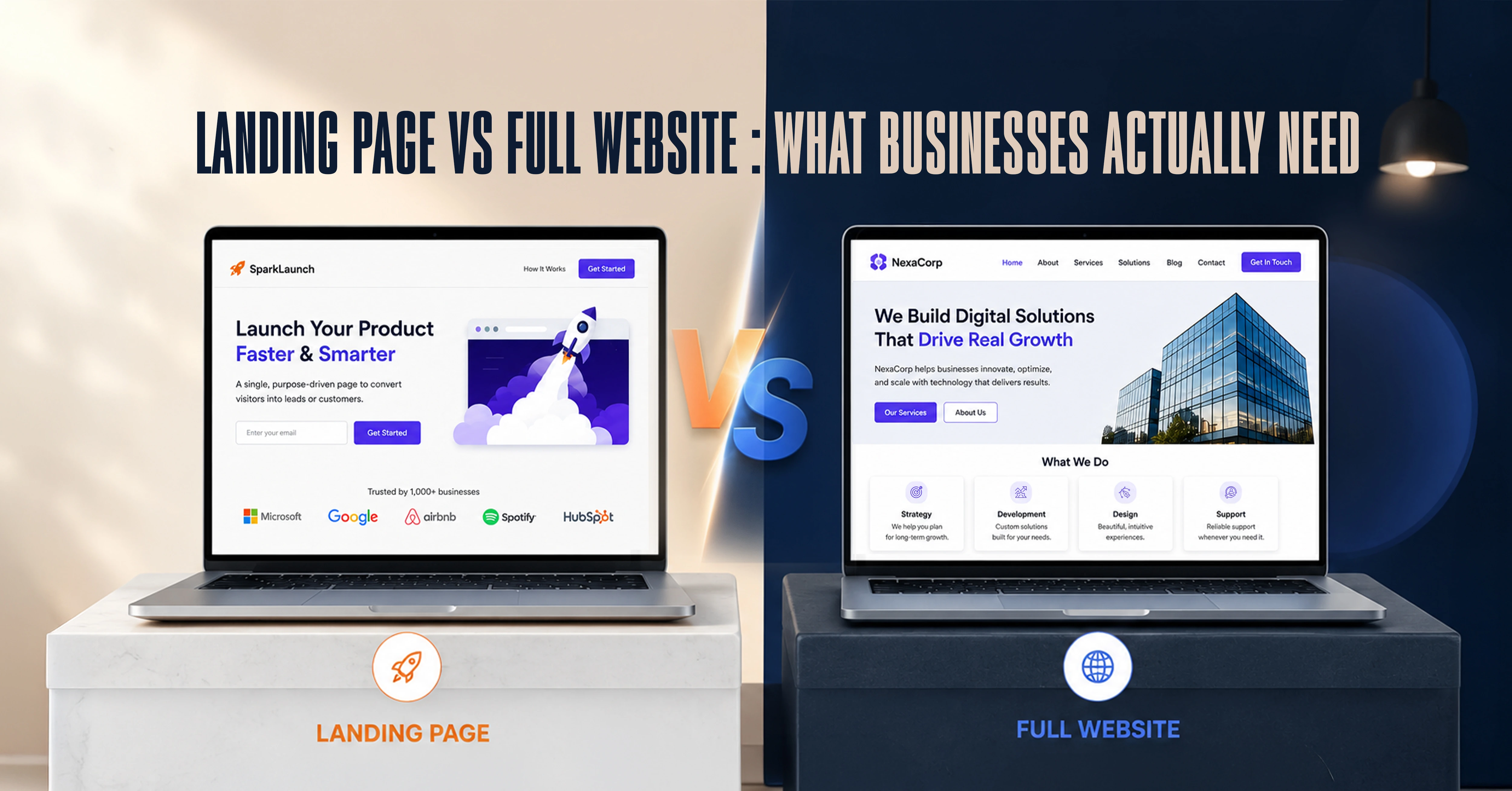
Yet the reality is far more nuanced. A landing page and a website are not competing solutions. They are different tools designed for different objectives.
The confusion usually begins when business owners view them as interchangeable. A marketing consultant recommends a landing page. A developer recommends a website. An advertising agency recommends both. The business owner becomes unsure which path creates the best return on investment.
At BRAND 360s, we frequently see companies invest in digital assets without first defining the business outcome they are trying to achieve. As a leading provider of website design services in Chennai, we consistently see businesses build the wrong thing — sometimes a large website when a focused landing page would have generated enquiries faster, other times relying entirely on a landing page when what they actually needed was authority, trust and long-term visibility.
Why Businesses Often Ask the Wrong Question
The Conversation Usually Starts With Cost
For many businesses, the discussion begins with the budget. A landing page appears simpler. A website appears larger. The immediate assumption is that one is a cheaper version of the other.
That assumption creates problems. The decision should not begin with cost. It should begin with business objectives.
The Real Question Is About Growth
Businesses do not invest in websites because they enjoy having websites. They invest because they want outcomes. Those outcomes may include enquiries, appointments, leads, visibility, authority, trust and sales.
Different objectives require different digital strategies.
Growth Determines the Right Choice
A business focused on generating enquiries from a specific advertising campaign may need something very different from a business focused on building long-term authority in Google. The objective determines the asset. Not the other way around.
What Exactly Is a Landing Page?
A Landing Page Has One Primary Goal
A landing page is designed around a single objective. It asks visitors to take one action. That action might be booking a consultation, requesting a quote, scheduling a demo, downloading a guide or registering for an event.
Everything on the page supports that objective.
Simplicity Is Its Greatest Strength
Unlike traditional websites, landing pages remove distractions. Navigation is often limited. Content is focused. Visitors are guided toward a specific action. This clarity often improves conversion rates.
Landing Pages Are Built for Campaigns
Landing pages perform particularly well when connected to Google Ads, Meta Ads, LinkedIn Ads, email campaigns and promotional offers. The visitor arrives with a specific intention. The landing page supports that intention.
What Exactly Is a Full Website?
A Website Has Multiple Responsibilities
Unlike a landing page, a website serves several purposes simultaneously. It helps visitors understand the business, evaluate services, explore solutions, build trust and contact the company. A website is designed to support broader business goals.
Customers Use Websites for Research
Modern customers rarely make decisions immediately. They compare options, review credentials, evaluate expertise and seek reassurance. A website supports that process.
Websites Create Digital Credibility
For many businesses, the website becomes the digital headquarters of the brand. Every marketing channel eventually leads back to it. This is why websites play a critical role in trust building.
Landing Page vs Website: Understanding the Fundamental Difference
Landing Pages Focus on Conversion
The primary purpose of a landing page is action. Visitors arrive, evaluate and decide. The process is intentionally streamlined.
Websites Focus on Trust
Websites provide context. They answer questions, reduce uncertainty and help visitors understand why the business deserves consideration. Trust is often the outcome.
One Is Built for Today and One Is Built for Tomorrow
Landing pages are excellent for immediate campaigns. Websites support long-term growth. Neither is inherently superior. They simply serve different functions.
Related: If you are still deciding on the format that suits your goals, our breakdown of one-page vs multi-page website: which is better for SEO and leads explores a closely related decision that many businesses face at the same stage.
The SEO Implications Most Businesses Ignore
Landing Pages Rarely Build Topical Authority
A single landing page can rank for specific keywords. However, it has limitations. Google increasingly rewards depth, expertise and topical coverage — qualities that are difficult to demonstrate through a single page.
Websites Create Opportunities for Search Visibility
A website allows businesses to create service pages, location pages, blog articles, case studies and resource content. Each page becomes an opportunity to attract relevant traffic.
Content Builds Long-Term Organic Growth
One of the greatest advantages of a website is its ability to support ongoing SEO services efforts. As content grows, visibility often grows alongside it. Understanding why this takes time is important — read our detailed post on why your website is not ranking even after SEO work to understand what actually happens behind the scenes.
Customer Psychology: How Buyers Actually Evaluate Businesses
Most Customers Do Not Buy Immediately
Businesses often assume visitors arrive ready to make decisions. In reality, most customers are still evaluating options. They are gathering information, reducing uncertainty and comparing providers.
Trust Usually Comes Before Conversion
This is particularly true for healthcare, consulting, legal services, architecture, branding and web development. Customers often need confidence before they take action. That confidence is rarely built through a single headline.
The Research Phase Is Expanding
Modern buyers have more information available than ever before. As a result, they conduct more research before contacting businesses. The companies that support this research process often gain a significant advantage.
Why Landing Pages Work So Well for Paid Advertising
Focus Reduces Distraction
One reason landing pages convert effectively is their simplicity. Visitors have fewer choices. That reduces decision fatigue.
Messaging Can Be Highly Specific
A Google Ads campaign targeting a particular service can direct visitors to a landing page designed specifically for that service. The relevance improves performance.
Conversion Becomes Easier to Measure
Landing pages provide clarity. Businesses can easily evaluate visitors, conversions, cost per lead and campaign performance. This makes optimization simpler.
Why Full Websites Generate Stronger Trust
Customers Want Validation
Before contacting a business, many visitors look for evidence. They want reassurance, proof and confidence.
Trust Signals Matter
A website allows businesses to showcase testimonials, case studies, portfolios, certifications, awards and media mentions. These trust signals often influence purchasing decisions.
Authority Requires Depth
A visitor evaluating a service provider rarely wants only a sales message. They want understanding, expertise and evidence that the company can deliver results. This is where websites often outperform landing pages.
The Most Expensive Mistake Businesses Make
Using a Landing Page When a Website Is Needed
One of the most common mistakes businesses make is relying entirely on a landing page when customers need more information before making a decision.
This is especially common in industries where trust plays a major role — healthcare, architecture, legal services, consulting, branding and website design. In these industries, customers rarely enquire after seeing a single page. They want reassurance, evidence and credibility.
A landing page alone may not provide enough confidence. Our detailed analysis of why most business websites in Chennai fail to convert reveals exactly how this gap in trust destroys conversion, even when traffic is strong.
Building a Website When a Landing Page Would Have Been Enough
The opposite mistake is equally common. A business launches a new service. Instead of building a focused campaign page, they invest months creating a large website. The result is often unnecessary complexity. In many situations, a well-designed landing page could have generated leads faster and more efficiently.
Solving the Wrong Problem
Businesses often focus on the format — landing page or website. The real question should be: what is the customer trying to achieve? The answer usually reveals which solution makes the most sense.
Founder Insight From BRAND 360s
Most Businesses Think They Need a Website
One of the most common conversations we have at BRAND 360s starts with: "We need a website." What businesses usually mean is: "We need more enquiries."
The distinction matters. Because a website is not the objective. Business growth is.
Many Businesses Actually Need a Conversion Strategy
A website can look beautiful and still fail. A landing page can look simple and outperform it. Why? Because performance is determined by strategy rather than appearance.
Businesses that focus only on design often overlook the customer journey. The customer journey is where conversions happen.
Digital Assets Must Match Business Objectives
The best digital strategies begin with questions such as: What are we trying to achieve? How do customers make decisions? How much trust is required before purchase? How will people find us? Only after answering those questions should businesses decide whether they need a landing page, a website or both.
Chennai Business Examples
🦷 The Dental Clinic
Why a landing page improved advertising performance. A dental clinic in Chennai wanted to increase enquiries for dental implants. Google Ads generated traffic. The website received visitors. Yet conversions remained inconsistent. The clinic introduced a focused landing page built around a single treatment. The result was immediate clarity. Visitors arrived with a specific need and found exactly what they were searching for.
Why the clinic still needed a website. While the landing page generated enquiries, patients continued researching before making appointments. Many visited the main website. They looked for doctor profiles, patient reviews, treatment information and clinic credibility. Trust was still being built through the website.
The Lesson: The landing page generated interest. The website generated confidence. Both played important roles.
🏠 The Interior Design Studio
Why trust was more important than conversion. An interior design studio in Chennai relied heavily on referrals and Instagram. Potential customers regularly visited the website before making contact. The challenge was not lead generation. The challenge was trust.
Why portfolio depth matters. A single landing page could not adequately showcase completed projects, design philosophy, client testimonials and process information. The website became a credibility asset.
The Lesson: Businesses selling premium services often require more than conversion. They require confidence. Confidence is usually built through depth.
Deep dive: For a deeper look at how Chennai businesses can improve this process, read our guide on how Chennai businesses can get more leads through their website.
Contrarian Observation: The Best Answer Is Often Neither
Businesses Should Stop Thinking in Either-Or Terms
One of the biggest misconceptions in digital marketing is the belief that businesses must choose between a landing page and a website. Many of the highest-performing companies use both.
Marketing and Trust Serve Different Purposes
A landing page is designed to generate action. A website is designed to support decision-making. These are complementary functions, not competing functions.
Growth Requires Multiple Assets
Businesses that scale successfully rarely rely on a single digital asset. They build systems — landing pages, websites, SEO content and advertising campaigns. Together they create growth.
The Hybrid Model Used by High-Growth Companies
Websites Build Authority
The website becomes the foundation. It supports SEO, trust, credibility and brand positioning. It creates long-term value.
Landing Pages Drive Campaign Performance
Landing pages support Google Ads, Meta Ads, seasonal campaigns and lead generation initiatives. They create focused conversion opportunities.
Together They Create Stronger Results
The highest-performing businesses rarely choose one over the other. Working with a results-focused digital marketing agency in Chennai means building both assets strategically — using each for its intended purpose to produce better outcomes across all channels.
Decision Framework: Which One Should You Choose?
When a Landing Page Makes Sense
A landing page is often the right choice when launching a new offer, running paid advertising, validating demand or promoting a specific service.
When a Website Makes Sense
A website is often the better option when building long-term authority, investing in SEO, showcasing multiple services or supporting trust-based purchases.
When You Need Both
Many established businesses benefit from a website for credibility paired with landing pages for campaigns. This approach balances growth and conversion.
Final Thoughts: The Question Is Not Landing Page or Website
The most successful businesses rarely ask: "Should we build a landing page or a website?" Instead, they ask: "What does our business need in order to grow?"
That question changes everything. A landing page may generate enquiries faster. A website may build trust more effectively. In many situations, the strongest strategy involves both.
What matters is alignment — alignment between customer behaviour, alignment between marketing objectives, alignment between business goals.
The businesses that achieve sustainable growth online are not necessarily those with the largest websites. Nor are they those with the most landing pages. They are the businesses that build the right digital assets for the right reasons.
Ready to Build the Right Digital Foundation?
The best digital assets are not the ones that look impressive. They are the ones that support business growth.
Every business invests time, effort and money attracting attention — whether from SEO, advertising, referrals or social media. The opportunity already exists.
The question is what happens next. Do visitors find enough clarity to take action? Do they find enough trust to make a decision? Do they find enough confidence to contact your business?
At BRAND 360s, we help businesses build websites, landing pages and digital ecosystems designed around trust, visibility and conversion. Because the goal is not simply to build pages. The goal is to build a business that grows.
If you are evaluating whether your business needs a landing page, a full website or a combination of both, speak with the team at BRAND 360s. As a website design company in Chennai focused on growth, our goal is not simply to build pages. Our goal is to help businesses create digital systems that generate trust, visibility and enquiries. Enquire now.
