

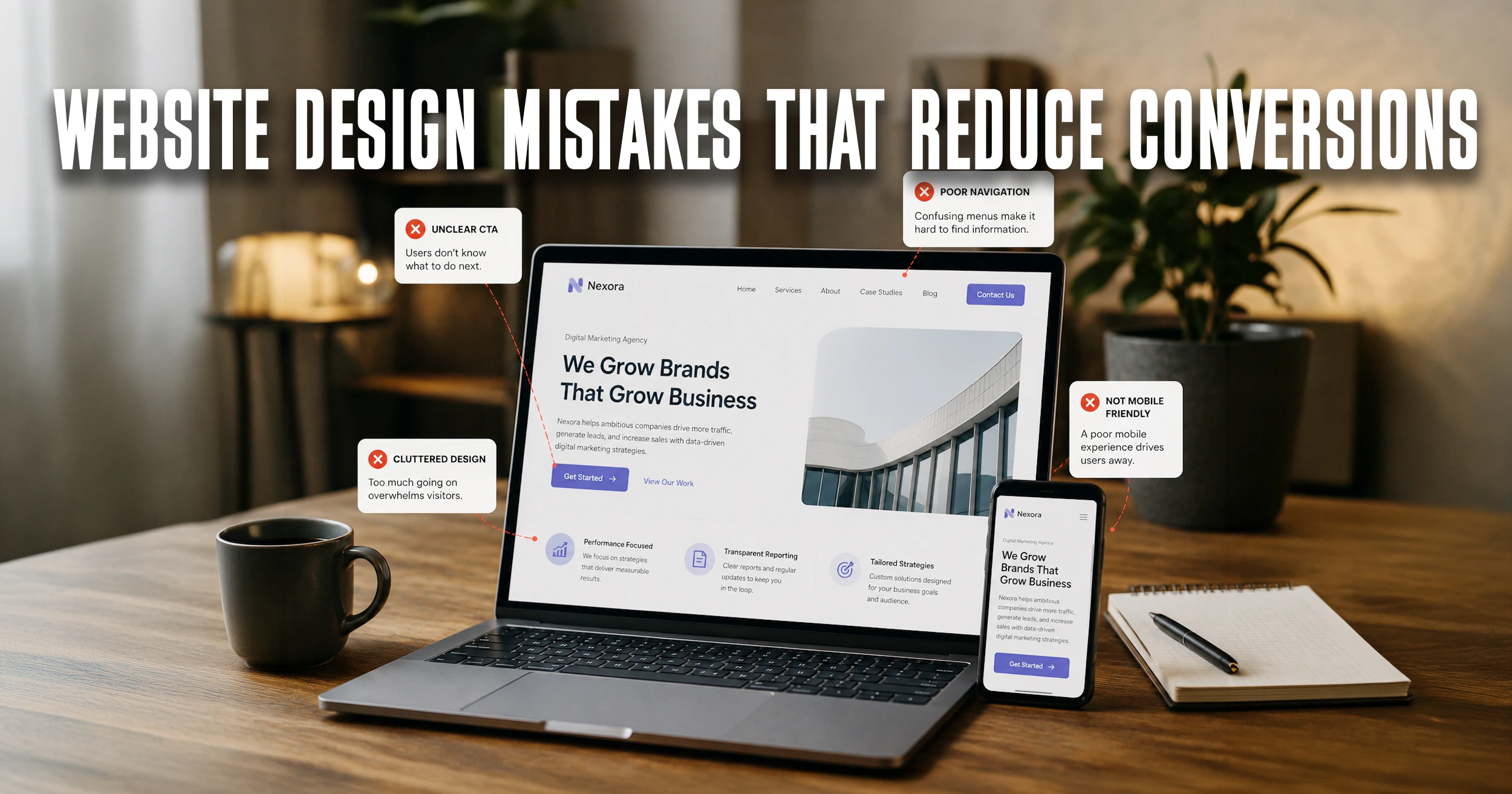
A website can look exceptional and still fail.
This is one of the most expensive misconceptions in modern business.
Many companies invest heavily in professional design, high-quality visuals and modern layouts. They launch the website with confidence, expecting enquiries to increase and sales conversations to become easier.
Then something unexpected happens.
Traffic arrives.
Visitors browse.
People spend time on the website.
Yet enquiries remain disappointing.
The business owner assumes the problem is marketing.
The marketing team assumes the problem is traffic.
The SEO agency assumes the problem is rankings.
In reality, the issue often sits directly in front of everyone.
The website itself.
At BRAND 360s, we frequently review websites that appear professional on the surface yet quietly undermine trust, create confusion and reduce conversions. Most of these mistakes are not obvious. In fact, many businesses live with them for years without realizing how much revenue they are costing.
The challenge is that poor website performance rarely announces itself.
A weak website does not send an email saying it lost a customer.
It simply allows opportunities to disappear quietly every day.
Understanding these mistakes is the first step toward building a website that supports business growth rather than limiting it.
The Most Expensive Website Mistakes Are Often Invisible
Businesses Notice Traffic Problems Faster Than Conversion Problems
When website traffic drops, businesses react quickly.
Analytics reveal the issue.
Rankings change.
Visitor numbers decline.
Conversion problems are different.
The traffic may still be there.
Visitors may still arrive.
The problem is that they leave without taking action.
Lost Trust Is Difficult to Measure
Many website issues are not technical.
They are psychological.
Visitors may leave because:
- the messaging feels unclear
- the business seems generic
- the website feels outdated
- trust is not established quickly enough
None of these problems appear as obvious errors.
Small Frictions Create Big Consequences
One confusing section.
One unclear headline.
One weak call to action.
Each may seem insignificant.
Together they can dramatically reduce enquiries.
Why Beautiful Websites Still Fail to Generate Enquiries
Design Alone Does Not Build Trust
Good design matters.
Professional presentation matters.
Neither automatically creates confidence.
Trust comes from the combination of design, messaging, positioning and user experience.
Customers Are Evaluating More Than Appearance
Visitors are silently asking:
- Can this company solve my problem?
- Do they understand businesses like mine?
- Can I trust them with my investment?
A visually attractive website that fails to answer those questions will struggle.
Conversion Requires More Than Aesthetics
A website can win compliments and still lose customers.
Business growth depends on what visitors do after they arrive.
Not what they think about the color palette.
Mistake #1: Prioritizing Design Before Strategy
Many Projects Begin With the Wrong Conversation
Businesses often start by discussing:
- colors
- layouts
- fonts
- animations
Far fewer begin by discussing:
- customer behaviour
- positioning
- conversion goals
- trust factors
That imbalance creates problems from the beginning.
Strategy Determines Performance
A website should answer a fundamental question.
What role does this website play in business growth?
Without that answer, design decisions become disconnected from business objectives.
Great Websites Are Built Around Outcomes
The strongest websites are not designed around aesthetics. They are designed around results. Businesses that understand this distinction tend to make smarter decisions from the start — including how they choose the right website design company in Chennai for business growth.
Mistake #2: Weak Headlines That Fail to Build Interest
Most Headlines Say Very Little
Many businesses rely on generic statements such as:
- Welcome to our website
- Quality services since 2010
- Your trusted partner
The problem is that these headlines communicate almost nothing.
Headlines Should Create Clarity
Within seconds visitors should understand:
- what you do
- who you help
- why it matters
Clarity reduces hesitation.
Good Headlines Guide Attention
Strong headlines help visitors move deeper into the website.
Weak headlines create uncertainty.
Mistake #3: Making Visitors Work Too Hard
Every Extra Step Creates Friction
Customers prefer simplicity.
The more effort required, the more likely they are to leave.
Confusion Is a Conversion Killer
Visitors should never have to search for basic information.
They should quickly understand:
- services
- benefits
- pricing approach
- next steps
Good UX Feels Invisible
The best user experiences often go unnoticed because everything feels effortless.
Mistake #4: Talking About the Business Instead of the Customer
Businesses Love Talking About Themselves
Many websites focus heavily on:
- company history
- achievements
- internal milestones
Visitors are focused on something else.
Their own challenges.
Customers Care About Outcomes
People want to know:
- what problem can be solved
- what result can be achieved
- why this business is relevant
Relevance Creates Engagement
When customers feel understood, they stay longer.
When they stay longer, trust begins to form.
Mistake #5: Hiding the Call to Action
Visitors Need Direction
One of the most common mistakes we see is assuming visitors automatically know what to do next.
They do not.
Strong Calls to Action Reduce Uncertainty
Good websites guide visitors naturally toward action.
Not aggressively.
Not forcefully.
Clearly.
Action Should Feel Easy
Whether it is:
- booking a call
- requesting a quote
- submitting an enquiry
The next step should always feel obvious.
Mistake #6: Ignoring Trust Signals
Trust Is Built Through Evidence
Visitors want reassurance.
They look for proof.
Testimonials Matter
Customer experiences reduce perceived risk.
Authority Matters
Trust signals may include testimonials, case studies, reviews, certifications, recognitions and media mentions. The absence of these signals creates doubt before a visitor even considers reaching out. This is one of the core reasons why most Chennai business websites fail to generate leads — not poor traffic, but poor trust architecture.
Mistake #7: Treating Mobile Users as Secondary
Mobile Is No Longer the Secondary Experience
For many Chennai businesses, more than half of website traffic now comes from mobile devices.
Yet surprisingly, many websites are still designed primarily for desktop users.
The result is predictable.
The website looks impressive on a large screen but becomes frustrating on a phone.
Visitors struggle to navigate.
Forms become difficult to complete.
Important information gets buried.
Frustration Reduces Trust
Customers rarely think:
"This website has poor mobile optimization."
Instead they think:
"This company feels difficult to deal with."
The perception transfers directly from the website to the business.
Mobile Experience Influences Enquiries
Small issues can have a significant impact — buttons too close together, difficult navigation, slow loading, excessive scrolling and hard-to-read text. Each creates friction. Each reduces conversion. This is exactly why mobile-first website design matters for Indian businesses more than most owners realise.
Mistake #8: Slow Websites Quietly Kill Conversions
Speed Influences First Impressions
Before visitors evaluate your expertise, they experience your website.
If the website feels slow, the business often feels slow.
That perception matters.
Every Second Matters
Businesses often spend thousands of rupees generating traffic through:
- SEO
- Google Ads
- social media
- referrals
Then lose potential customers because the website takes too long to load.
Speed Affects More Than Conversion
Website speed influences user experience, bounce rate, engagement, search visibility and customer trust. Performance is not a technical detail. It is a business issue. Understanding how fast websites improve SEO and customer trust makes clear why speed should be a priority from day one — not an afterthought.
Mistake #9: Sending Paid Traffic to Weak Pages
Ads Cannot Fix a Broken Experience
This is one of the most expensive mistakes businesses make.
They invest heavily in advertising.
Traffic increases.
Clicks increase.
Website visits increase.
Enquiries do not.
The immediate assumption is that advertising failed.
Often the advertising worked perfectly.
The Problem Begins After the Click
Imagine inviting people into a showroom.
They arrive.
They look around.
Nothing is clear.
Nobody guides them.
Most leave.
The same thing happens on weak websites.
More Traffic Often Exposes Conversion Problems
One of the uncomfortable truths of digital marketing is this: traffic does not fix conversion problems. Traffic exposes them. Many businesses debate SEO vs Google Ads and which delivers better ROI — but whichever channel brings the visitor, the website still has to do the work after they arrive. More traffic simply makes a weak website's problems more visible and more expensive.
Founder Insight From BRAND 360s
One of the Most Common Misconceptions We See
One of the biggest misconceptions we see at BRAND 360s is the belief that websites fail because they are not attracting enough visitors.
Sometimes that is true.
More often, the problem is something else entirely.
The website is attracting attention but failing to create confidence.
Businesses Often Solve the Wrong Problem
When enquiries decline, many companies immediately invest more in SEO services in Chennai, advertising and social media. Those investments can be valuable. However, if the website itself creates hesitation, every marketing effort becomes less effective.
Visibility and Trust Must Work Together
A website has two jobs.
First, it must be found.
Second, it must be trusted.
Most businesses focus heavily on the first and underestimate the second.
The companies generating the strongest results understand that visibility and trust are not separate conversations.
They are part of the same system.
Chennai Business Examples
The Architecture Firm
A Chennai architecture firm invests in Google Ads and begins receiving traffic.
Visitors arrive.
The portfolio looks impressive.
The problem is that the website never clearly explains:
- project process
- specialization
- service areas
Potential clients leave with unanswered questions.
The Dental Clinic
A dental clinic receives hundreds of monthly visitors.
The website includes treatments but lacks:
- patient testimonials
- before-and-after proof
- trust signals
Patients continue researching competitors.
The Consultant
A consultant has excellent expertise but a generic website.
Visitors cannot immediately understand:
- who the consultant helps
- what makes the approach different
- why they should enquire
The website creates curiosity but not confidence.
The Lesson
In each case, traffic was not the primary issue.
Trust was.
Contrarian Observation: More Information Is Not Always the Problem
Businesses Often Fear Long Content
Many companies believe modern customers have short attention spans.
As a result, they remove detail.
They shorten explanations.
They simplify everything.
People Do Not Avoid Information
People avoid irrelevant information.
When a customer is considering a significant purchase, they actively seek detail.
They want reassurance.
They want evidence.
They want confidence.
The Goal Is Better Information
Successful websites do not necessarily have less content.
They have more relevant content.
That distinction matters.
What High-Converting Websites Do Differently
They Prioritize Clarity
Visitors immediately understand:
- what the business does
- who it helps
- why it matters
They Build Trust Intentionally
Trust is not left to chance.
It is reinforced through:
- messaging
- testimonials
- proof
- structure
- consistency
They Guide Decisions
High-converting websites make the next step obvious.
Visitors never feel lost.
They Focus on Outcomes
The strongest websites are designed around:
- trust
- enquiries
- conversion
- growth
rather than appearance alone.
Final Thoughts: Every Website Is Either Building Confidence or Losing It
Most website mistakes are not dramatic.
They do not break the website.
They do not trigger warnings.
They simply create small moments of hesitation.
A confusing headline.
A missing trust signal.
A slow-loading page.
An unclear call to action.
Each seems insignificant.
Together they can dramatically influence whether a visitor becomes a customer.
That is why successful businesses view websites differently.
They do not see websites as design projects.
They see them as growth assets.
Every section has a purpose.
Every page supports trust.
Every decision contributes to conversion.
The difference may appear subtle.
The business impact is not.
Ready to Build a Website That Supports Growth?
The best websites are not the ones that win compliments.
They are the ones that win customers.
Every business invests time, effort and money attracting attention. Whether that attention comes from SEO, referrals, social media or advertising, the opportunity already exists.
The question is what happens after visitors arrive.
Do they understand your value?
Do they trust your business?
Do they feel confident enough to take the next step?
Or do they leave and continue their search elsewhere?
At BRAND 360s, we help businesses build websites designed around trust, clarity, user experience and conversion.
Because the goal is not simply to create a better website. The goal is to create a better business.
Ready to build a website that supports your growth?
